Introduction
Choosing the right insufferable synonym can make your writing more precise, expressive, and natural. Whether you are writing an essay, improving your English vocabulary, creating content, or describing a frustrating experience, understanding these alternatives will help you communicate your thoughts clearly.
In this guide, you will discover 30 synonyms for insufferable, their simple meanings, realistic example sentences, and the best contexts in which to use them.
Quick Answer: What Is a Synonym for Insufferable?
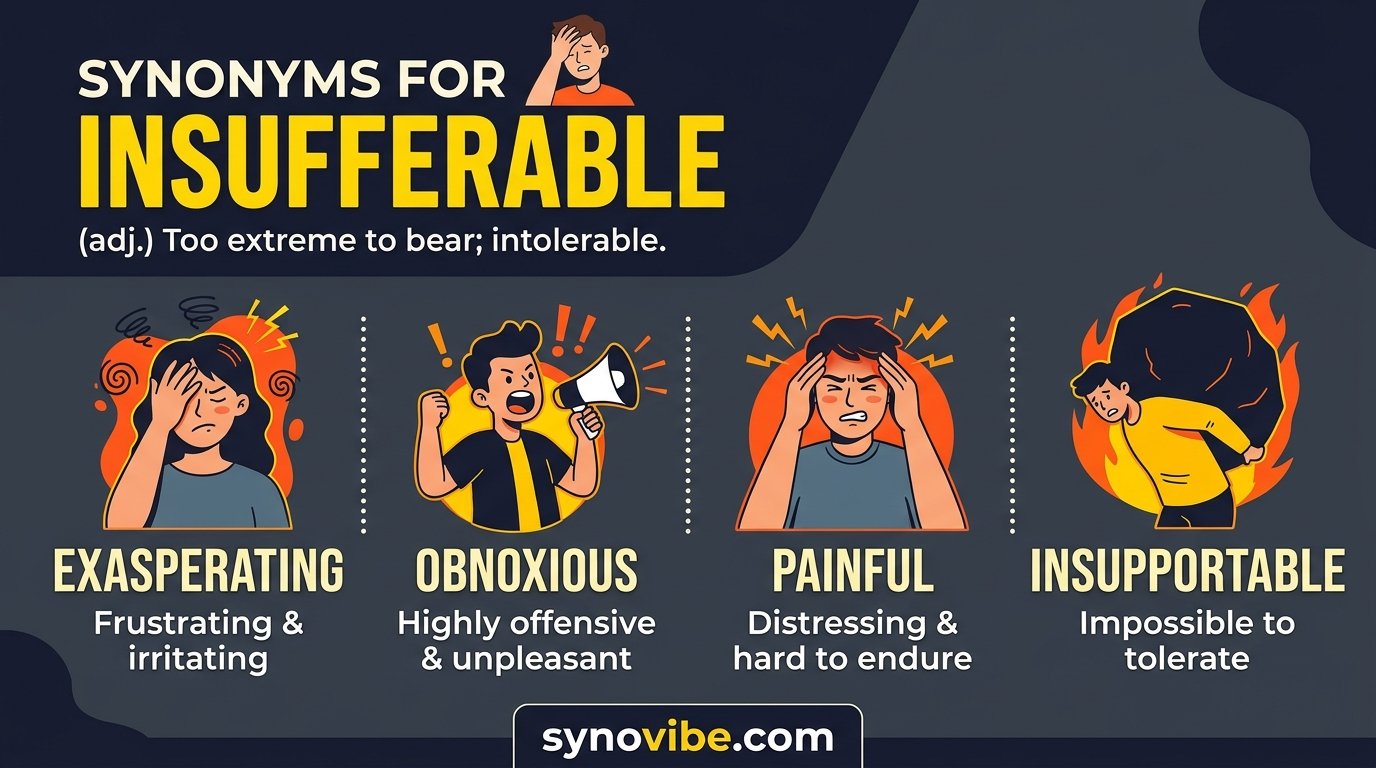
The best synonyms for insufferable are unbearable, intolerable, obnoxious, unendurable, and insupportable.
- Unbearable: Too unpleasant or painful to endure.
- Intolerable: So bad that it cannot reasonably be accepted.
- Obnoxious: Extremely unpleasant or offensive, especially in someone’s behavior.
- Unendurable: Too difficult or painful to continue experiencing.
- Insupportable: Impossible or extremely difficult to tolerate or justify.
The best choice depends on your intended meaning. Use unbearable for extreme discomfort, obnoxious for offensive behavior, and intolerable for unacceptable situations.
What Does Insufferable Mean?
Insufferable is an adjective that describes someone or something so unpleasant, irritating, or difficult that it is extremely hard to tolerate.
It often describes a person’s behavior, an uncomfortable situation, an unpleasant experience, or something that causes intense frustration.
Simple Definition
Insufferable means extremely annoying, unpleasant, or impossible to tolerate.
Example Sentences
- Person: His insufferable attitude made it difficult for his coworkers to work with him.
- Situation: The insufferable heat made the afternoon walk exhausting.
- Behavior: Her insufferable habit of interrupting everyone frustrated the entire group.
- Experience: The constant noise became insufferable after several hours.
Is Insufferable a Positive or Negative Word?
Insufferable is a negative word. It expresses strong disapproval, irritation, or frustration.
Calling someone insufferable is much stronger than simply calling them annoying. It suggests that their behavior or personality is exceptionally difficult to tolerate.
For example:
- He is annoying. This suggests that his behavior bothers you.
- He is insufferable. This suggests that his behavior is extremely difficult to put up with.
Because the word is strong, use it carefully in formal communication or sensitive personal situations.
30 Synonyms for Insufferable With Meanings and Examples
The following words offer different ways to describe something or someone that is difficult to tolerate. Some are direct synonyms, while others are suitable alternatives in particular contexts.
1. Unbearable
Meaning: So unpleasant, painful, or difficult that it is almost impossible to endure.
Example: The unbearable heat forced everyone to leave the outdoor event early.
Best usage/context: Use unbearable when describing extreme physical discomfort, emotional pain, noise, or difficult conditions.
2. Intolerable
Meaning: So unpleasant, unacceptable, or difficult that it cannot reasonably be tolerated.
Example: The employees refused to continue working under intolerable conditions.
Best usage/context: Use intolerable in formal writing, workplace discussions, and descriptions of unacceptable behavior or circumstances.
3. Obnoxious
Meaning: Extremely unpleasant, offensive, or irritating, especially because of someone’s behavior.
Example: His obnoxious comments made everyone uncomfortable during dinner.
Best usage/context: Use obnoxious when describing rude, offensive, arrogant, or irritating people and their actions.
4. Unendurable
Meaning: Too painful, difficult, or unpleasant to endure.
Example: The suspense became unendurable as the audience waited for the final announcement.
Best usage/context: Use unendurable for intense physical or emotional experiences, especially when you want a slightly formal or literary tone.
5. Insupportable
Meaning: Impossible or extremely difficult to tolerate, bear, or justify.
Example: The manager considered the repeated violations of company policy insupportable.
Best usage/context: Use insupportable in formal or literary writing, particularly when describing unacceptable behavior, arguments, or circumstances.
6. Annoying
Meaning: Causing irritation or mild frustration.
Example: The annoying sound of the dripping tap kept me awake.
Best usage/context: Use annoying for everyday frustrations, irritating habits, and minor inconveniences.
Difference: Annoying is generally weaker than insufferable.
7. Irritating
Meaning: Causing someone to feel impatient, bothered, or frustrated.
Example: His irritating habit of repeating the same question distracted the entire class.
Best usage/context: Use irritating when a behavior, sound, habit, or situation repeatedly bothers someone.
8. Exasperating
Meaning: Extremely frustrating and likely to make someone lose patience.
Example: It was exasperating to explain the same instructions five times without being understood.
Best usage/context: Use exasperating when describing situations or behavior that cause strong frustration.
9. Infuriating
Meaning: Extremely annoying or frustrating in a way that makes someone very angry.
Example: The infuriating delay caused us to miss our connecting flight.
Best usage/context: Use infuriating when the situation produces anger rather than simple irritation.
10. Aggravating
Meaning: Causing irritation, frustration, or increased annoyance.
Example: The aggravating traffic made her late for an important meeting.
Best usage/context: Use aggravating for everyday problems, repeated inconveniences, and frustrating circumstances.
11. Irrksome
Meaning: Annoying or irritating, especially over time.
Example: The irksome interruptions made it difficult to finish the report.
Best usage/context: Use irksome when describing persistent annoyances in formal or literary writing.
12. Vexing
Meaning: Causing worry, annoyance, or frustration.
Example: The missing documents presented a vexing problem for the research team.
Best usage/context: Use vexing when a problem is both irritating and difficult to resolve.
13. Tiresome
Meaning: Making someone feel bored, tired, or impatient because something continues for too long.
Example: His tiresome complaints prevented the group from enjoying the trip.
Best usage/context: Use tiresome for repetitive conversations, boring activities, or exhausting behavior.
14. Wearisome
Meaning: Causing mental or physical tiredness through repetition, length, or difficulty.
Example: The wearisome process of completing the paperwork took the entire afternoon.
Best usage/context: Use wearisome in descriptive, formal, or literary writing when something gradually drains energy or patience.
15. Bothersome
Meaning: Causing trouble, inconvenience, or mild irritation.
Example: The bothersome notifications interrupted my study session.
Best usage/context: Use bothersome for minor problems, inconvenient tasks, or small but persistent distractions.
16. Offensive
Meaning: Causing anger, disgust, or hurt because something is disrespectful or inappropriate.
Example: His offensive remarks about the new employee upset the team.
Best usage/context: Use offensive when the main issue is disrespectful, insulting, or inappropriate behavior.
Difference: Something offensive may be insufferable, but the words emphasize different qualities. Offensive focuses on causing offense.
17. Repulsive
Meaning: Extremely unpleasant or disgusting, causing a strong feeling of dislike.
Example: The repulsive smell coming from the abandoned building made us leave immediately.
Best usage/context: Use repulsive for something that creates intense disgust or aversion.
18. Revolting
Meaning: Extremely disgusting or offensive.
Example: The revolting condition of the kitchen shocked the health inspector.
Best usage/context: Use revolting when describing something that produces a powerful feeling of disgust.
19. Disgusting
Meaning: Extremely unpleasant, especially because something causes disgust.
Example: His disgusting behavior toward the waiter embarrassed everyone at the table.
Best usage/context: Use disgusting for offensive actions, unpleasant sights, bad smells, or anything that provokes disgust.
20. Loathsome
Meaning: Deserving intense dislike or disgust.
Example: The novel portrays the villain as a loathsome character who enjoys hurting others.
Best usage/context: Use loathsome in literary writing, character descriptions, and strong expressions of moral disapproval.
21. Detestable
Meaning: Deserving strong dislike or hatred.
Example: The dishonest politician’s detestable actions damaged public trust.
Best usage/context: Use detestable when describing conduct or qualities that deserve strong condemnation.
22. Despicable
Meaning: Extremely bad or morally unacceptable.
Example: Stealing money from a charity was a despicable act.
Best usage/context: Use despicable for actions or people considered morally shameful, cruel, or dishonorable.
Difference: Insufferable describes something difficult to tolerate, while despicable emphasizes moral wrongdoing.
23. Abhorrent
Meaning: Causing intense disgust, hatred, or moral opposition.
Example: The organization considers discrimination abhorrent.
Best usage/context: Use abhorrent in formal discussions of serious moral issues, unacceptable conduct, or deeply objectionable practices.
24. Hateful
Meaning: Extremely unpleasant or expressing strong dislike, hostility, or malice.
Example: His hateful comments created tension throughout the discussion.
Best usage/context: Use hateful when describing hostile words, cruel behavior, or actions motivated by hatred.
25. Unpleasant
Meaning: Not enjoyable, comfortable, or agreeable.
Example: We had an unpleasant conversation about the misunderstanding.
Best usage/context: Use unpleasant when you want a mild, neutral, or diplomatic alternative to insufferable.
26. Unpalatable
Meaning: Difficult to accept, tolerate, or find agreeable.
Example: The committee had to consider an unpalatable solution to the financial problem.
Best usage/context: Use unpalatable for difficult truths, unpopular decisions, disagreeable ideas, or literal food that tastes unpleasant.
27. Unacceptable
Meaning: Not good enough or not suitable to be accepted.
Example: The supervisor explained that repeated lateness was unacceptable.
Best usage/context: Use unacceptable when emphasizing that behavior, conditions, or decisions do not meet reasonable standards.
28. Unconscionable
Meaning: So unfair, unreasonable, or morally wrong that it is difficult to justify.
Example: Charging vulnerable customers hidden fees was an unconscionable business practice.
Best usage/context: Use unconscionable in formal writing about serious unfairness, exploitation, or unethical behavior.
29. Maddening
Meaning: Extremely frustrating or irritating.
Example: The maddening computer error appeared every time I tried to save my work.
Best usage/context: Use maddening in conversational and descriptive writing when something repeatedly tests a person’s patience.
30. Excruciating
Meaning: Extremely painful or intensely uncomfortable.
Example: The excruciating noise from the construction site made it impossible to concentrate.
Best usage/context: Use excruciating for severe pain or exceptionally intense discomfort. It can also describe a deeply awkward or tedious experience.
Difference: Excruciating is not a general synonym for every use of insufferable. It is most appropriate when emphasizing extreme intensity.
Comparison Table: Which Insufferable Synonym Should You Use?
Choosing the right word depends on what makes a person, action, or situation difficult to tolerate.
| Synonym | Main Meaning | Tone | Best Context |
| Unbearable | Too difficult to endure | Strong | Pain, heat, noise, emotional distress |
| Intolerable | Impossible to accept or tolerate | Formal, strong | Conditions, behavior, unfair treatment |
| Obnoxious | Extremely unpleasant or offensive | Strong, conversational | Rude or arrogant people |
| Exasperating | Causing intense frustration | Descriptive | Repeated problems or behavior |
| Infuriating | Causing intense anger | Strong | Delays, unfairness, frustrating events |
| Annoying | Causing irritation | Mild | Everyday inconveniences |
| Irritating | Causing repeated annoyance | Neutral | Habits, sounds, behavior |
| Tiresome | Causing boredom or impatience | Mild to moderate | Repetitive conversations or tasks |
| Offensive | Causing offense or hurt | Serious | Insults and inappropriate behavior |
| Repulsive | Causing disgust | Strong | Unpleasant sights, smells, or conduct |
| Detestable | Deserving intense dislike | Strong, formal | Morally objectionable behavior |
| Abhorrent | Causing intense moral disgust | Very strong, formal | Serious ethical issues |
| Unpleasant | Not enjoyable or agreeable | Mild, neutral | General discomfort |
| Unacceptable | Not suitable to be accepted | Firm, formal | Rules, standards, and conduct |
| Unpalatable | Difficult to accept | Formal | Unpopular ideas or decisions |
Insufferable vs. Unbearable
Both words describe experiences that are extremely difficult to tolerate.
However, unbearable often emphasizes the intensity of discomfort, pain, or suffering. Insufferable frequently describes an irritating personality or behavior.
- Insufferable: His insufferable arrogance alienated his friends.
- Unbearable: The unbearable pain kept her awake all night.
Insufferable vs. Intolerable
These words are close in meaning, but their typical uses differ.
Intolerable often emphasizes that a situation or behavior is unacceptable. Insufferable can emphasize how deeply irritating or unpleasant something feels.
- Insufferable: Her insufferable habit of bragging annoyed her classmates.
- Intolerable: The unsafe working conditions were intolerable.
Insufferable vs. Obnoxious
Obnoxious usually focuses on behavior that is offensive, rude, or irritating. Insufferable is broader and can describe people, experiences, conditions, or behavior.
- Insufferable: The long wait became insufferable.
- Obnoxious: His obnoxious jokes offended the guests.
Insufferable vs. Annoying
The difference is mainly intensity.
Annoying describes something that causes irritation. Insufferable suggests that the irritation or unpleasantness has become extreme.
- Annoying: The buzzing phone was annoying.
- Insufferable: The constant buzzing became insufferable after several hours.
How to Choose the Right Synonym for Insufferable
Not every synonym communicates the same feeling. Use the following guide to select the most appropriate word for your sentence.
1. Choose According to Tone
For everyday conversations
Use:
- Annoying
- Irritating
- Bothersome
- Unpleasant
- Maddening
Example: The constant interruptions were irritating.
These words are useful when you want to sound natural without being overly dramatic.
For strong emotional reactions
Use:
- Unbearable
- Infuriating
- Exasperating
- Intolerable
- Unendurable
Example: The repeated delays became unbearable.
These alternatives express more intense frustration or discomfort.
For formal or academic writing
Use:
- Intolerable
- Insupportable
- Unacceptable
- Unconscionable
- Abhorrent
Example: The report described the treatment of workers as unacceptable.
Choose the word that accurately expresses your argument rather than automatically selecting the strongest alternative.
For literary or descriptive writing
Use:
- Loathsome
- Detestable
- Vexing
- Wearisome
- Repulsive
Example: The author created a loathsome villain whose cruelty affected every character.
These words can give descriptions a more specific emotional or stylistic effect.
2. Choose According to Meaning
Ask yourself what makes the situation difficult to tolerate.
If it causes irritation: Choose annoying, irritating, or bothersome.
If it causes anger: Choose infuriating, maddening, or exasperating.
If it causes physical or emotional suffering: Choose unbearable or unendurable.
If it is unacceptable: Choose intolerable or unacceptable.
If it is offensive or disrespectful: Choose obnoxious or offensive.
If it causes disgust: Choose repulsive, revolting, or disgusting.
If it is morally wrong: Choose despicable, detestable, or abhorrent.
3. Choose According to Your Intent
Your purpose also affects which word works best.
To describe a difficult person
- Insufferable
- Obnoxious
- Irritating
- Detestable
Example: His obnoxious behavior made collaboration difficult.
To describe a frustrating situation
- Exasperating
- Infuriating
- Maddening
- Intolerable
Example: The maddening delay disrupted our schedule.
To describe an uncomfortable experience
- Unbearable
- Unendurable
- Unpleasant
- Excruciating
Example: The unbearable heat forced us to stop walking.
To criticize unacceptable conduct
- Offensive
- Despicable
- Unacceptable
- Unconscionable
Example: The committee condemned the unconscionable treatment of vulnerable customers.
4. Consider the Strength of the Word
A synonym should match the seriousness of the situation.
For a minor inconvenience, bothersome or annoying is usually sufficient.
For repeated behavior that seriously tests your patience, exasperating or insufferable may be more appropriate.
For an extreme experience, unbearable or unendurable may communicate the intensity more effectively.
For morally unacceptable actions, despicable or abhorrent may be appropriate if the context justifies such strong language.
The best synonym is not necessarily the strongest word. It is the word that expresses your intended meaning accurately.
Common Mistakes When Using Insufferable Synonyms
Although many synonyms for insufferable share similar meanings, they are not always interchangeable.
1. Using Insufferable for Every Annoying Situation
Insufferable is a strong adjective. Using it for every minor inconvenience can make your writing sound exaggerated.
Less appropriate: The slightly slow internet connection was insufferable.
More natural: The slightly slow internet connection was annoying.
Use insufferable when the experience is genuinely extreme or when you intentionally want to emphasize strong frustration.
2. Confusing Obnoxious With Unbearable
Obnoxious usually describes offensive or irritating behavior, while unbearable emphasizes extreme discomfort or difficulty.
Example: His obnoxious comments irritated the audience.
Example: The unbearable heat made the audience leave early.
The first describes behavior; the second emphasizes discomfort.
3. Using Despicable When You Only Mean Annoying
Despicable is a strong moral judgment. It suggests that someone or something deserves serious condemnation.
Incorrect choice for a minor problem: Her despicable habit of tapping her pencil annoyed me.
More appropriate: Her irritating habit of tapping her pencil annoyed me.
Reserve despicable for conduct that genuinely warrants strong moral disapproval.
4. Confusing Intolerable With Intolerant
These words are related in form but have different meanings.
- Intolerable: Too difficult or unacceptable to tolerate.
- Intolerant: Unwilling to accept differences, opinions, or beliefs.
Examples:
The intolerable noise disturbed the neighborhood.
The intolerant speaker refused to consider other viewpoints.
Do not use these words interchangeably.
5. Using Formal Words in Casual Conversations
Words such as insupportable, unconscionable, and abhorrent can sound overly formal in everyday conversation.
Instead of saying, The delay was insupportable, you might naturally say, The delay was unbearable or The delay was incredibly frustrating.
Match your vocabulary to your audience and the situation.
6. Ignoring the Context of the Sentence
A word that works well for a person may not be the best choice for a physical experience.
For example, obnoxious is suitable for rude behavior, while unendurable is often more suitable for severe discomfort.
Always consider the noun being described and the meaning you want to communicate.
FAQs:
1. What is the closest synonym for insufferable?
The closest synonyms for insufferable are unbearable, intolerable, and unendurable. All three describe something extremely difficult to tolerate. However, unbearable is especially common for intense discomfort, while intolerable often emphasizes unacceptable conditions or behavior.
2. What is another word for an insufferable person?
Common alternatives include obnoxious, irritating, annoying, exasperating, and detestable. Choose obnoxious for offensive behavior, irritating for behavior that causes annoyance, and detestable when expressing very strong dislike.
3. What is a stronger word than annoying?
Depending on the context, stronger alternatives include exasperating, infuriating, intolerable, and insufferable. Use exasperating for intense frustration, infuriating for something that causes anger, and insufferable for something extremely unpleasant or difficult to tolerate.
4. Is insufferable a negative word?
Yes. Insufferable has a negative meaning and expresses strong irritation, frustration, or disapproval. It can describe a person’s behavior, an unpleasant situation, or an experience that is exceptionally difficult to tolerate.
5. What is the difference between insufferable and intolerable?
Both words describe something difficult to tolerate. Insufferable often emphasizes extreme unpleasantness or irritating behavior, while intolerable frequently emphasizes that a condition or action is unacceptable.
For example, his insufferable arrogance describes an irritating personal quality, whereas intolerable working conditions emphasizes unacceptable circumstances.
6. Can insufferable describe a situation?
Yes. Insufferable can describe a person, behavior, physical condition, or situation.
Examples include:
- The insufferable noise continued throughout the night.
- The insufferable heat made outdoor activities difficult.
- His insufferable attitude created tension among his colleagues.
The word is particularly effective when you want to emphasize how difficult an experience is to tolerate.
7. What is the opposite of insufferable?
Possible antonyms include pleasant, agreeable, enjoyable, tolerable, and bearable.
The best opposite depends on the context. Pleasant describes something enjoyable, agreeable suggests something acceptable or likable, and bearable means that something can be endured.
8. Is insufferable appropriate for formal writing?
Yes, insufferable can be used in formal writing when it accurately expresses the intended meaning. However, it can sound judgmental when applied to a person.
In academic or professional writing, words such as intolerable, unacceptable, or unbearable may communicate the intended point more precisely, depending on the context.
Conclusion
Learning synonyms for insufferable helps you express frustration, discomfort, and disapproval more accurately. Although words such as unbearable, intolerable, obnoxious, exasperating, and annoying share aspects of the same meaning, each communicates a different level or type of unpleasantness.
Use unbearable for extreme discomfort, intolerable for unacceptable conditions, obnoxious for offensive behavior, and exasperating for situations that test your patience. For milder situations, annoying or bothersome may be more appropriate.
The key is to consider your intended meaning, audience, and tone before choosing a replacement. By understanding these 30 insufferable synonyms and their differences, you can improve your vocabulary, write more naturally, and communicate your ideas with greater precision.

Charlotte Davis is a content writer with a passion for words, vocabulary, and the art of clear communication. She creates helpful content about synonyms and word choices, helping readers discover alternative expressions and communicate with greater clarity and confidence.